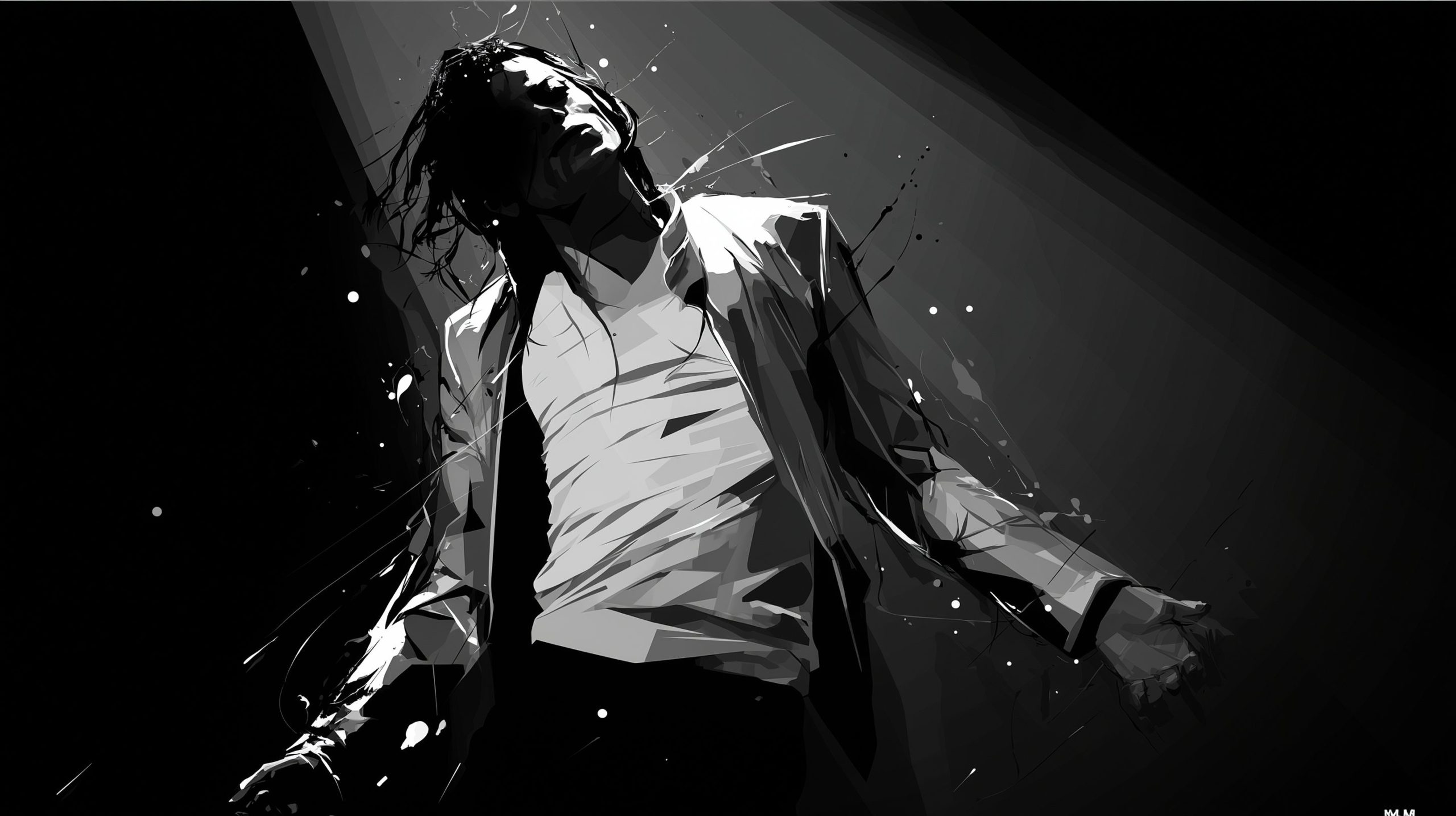
Michael Joseph Jackson. Three words that conjure up instant images in the minds of millions: a white, bejeweled glove, a gravity-defying moonwalk, a voice that can shift from the most delicate falsetto to the most visceral scream. But behind these iconic images lies a much more complex and profound story. The story of a child prodigy from Gary, Indiana, who became the most famous entertainer on the planet. The story of a musical genius who transformed popular culture and broke down racial barriers. The story of a man who paid a devastating price for his fame and who could never escape the shadow of his stolen childhood.
Michael Jackson was not simply a singer or a dancer. He was a cultural phenomenon, a visionary who saw the potential of the music video as a cinematic art form, an obsessive perfectionist who dedicated his entire life to the pursuit of artistic excellence. He was the King of Pop, a title he didn’t bestow upon himself, but one conferred by a world that recognized his absolute mastery of popular music. But he was also a profoundly lonely man, tormented by personal demons, hounded by the media, and misunderstood by a public that both adored and judged him.
This is the complete story of Michael Jackson, from his early days in a small, two-bedroom house in Gary, Indiana, to his tragic death in Los Angeles in 2009. It is a story of triumph and tragedy, of genius and controversy, of love and loneliness. It is the story of how a child with extraordinary talent became the greatest artist of his generation, and how the weight of that greatness ultimately crushed him. It is a story that deserves to be told in its entirety, with all its nuances, its light and its shadows.
Chapter 1: The Night the World Stopped
The air in the Pasadena Civic Auditorium was charged with a palpable electricity, a mixture of nostalgia and anticipation. It was March 25, 1983, and the television special Motown 25: Yesterday, Today, Forever was being taped. Backstage, a slender, intensely focused 24-year-old was preparing to go on stage. He wore an outfit that would become legendary: black pants, loafers, a black sequined jacket, and a single white glove adorned with rhinestones. It was Michael Jackson, and he was about to change the history of music forever.
The Motown special was a reunion of giants. Smokey Robinson, Marvin Gaye, Diana Ross and The Supremes, The Temptations, The Four Tops… they were all there to celebrate the 25th anniversary of the record label that had made them stars. Michael and his brothers had given a moving performance of their hits as The Jackson 5, a trip down memory lane that delighted the audience. But Michael had negotiated one condition for his participation: after the reunion with his brothers, he would have a moment alone to perform a song from his new album, Thriller. An album that, ironically, wasn’t on Motown, but on Epic Records.
When his brothers left the stage, Michael was left alone, bathed in the light of a single spotlight. He addressed the audience in a soft but firm voice: “I love the old songs, but I like the new ones too.” Then, the opening bars of “Billie Jean” began. The syncopated rhythm and hypnotic bassline filled the auditorium. Michael donned a black fedora, struck a pose reminiscent of the greats of musical cinema, and began to move. Every gesture, every turn, every twitch was pure sexual energy and theatricality. The audience was mesmerized.
And then, during the song’s instrumental bridge, it happened. For barely two seconds, Michael Jackson seemed to defy the laws of physics. He glided effortlessly backward, as if floating across the stage. It was the moonwalk. A move that wasn’t new, rooted in street dances and artists like Cab Calloway and James Brown, but one that Michael perfected and made his signature. The audience went wild. In homes across the United States, 47 million viewers held their breath. In that instant, Michael Jackson ceased to be a former child star and became the King of Pop.
The performance was a turning point. As the special’s executive producer, Suzanne De Passe, would later recall, Michael’s team didn’t even want the “Billie Jean” performance recorded. But she persisted, and the result was one of the most iconic performances in television history. On the night of May 16, 1983, when the special aired, the world witnessed the birth of a new kind of artist: a visionary who fused music, dance, and spectacle in a way never before seen. An artist who, from that moment on, would dominate popular culture for decades to come.
In the days following the broadcast, the impact was seismic. Sales of Thriller, already a massive hit, skyrocketed. Michael’s white glove became a cult phenomenon, imitated by children and adults worldwide. Fred Astaire, the legendary dancer and actor, personally called Michael to congratulate him, saying, “You’re a dancer from hell. You’re a singer from hell. You’re a performer from hell.” It was the recognition of one master to another, a passing of the torch across generations.
But beyond the technique and the spectacle, what made that night so special was Michael’s emotional authenticity. On that stage, he wasn’t simply performing; he was channeling something deep and visceral. He was a young man who had spent his entire life on stage, who had sacrificed his childhood for his art, and who now, at the height of his power, was claiming his place in history. The question on everyone’s mind that night was: Where did this young man come from, and how did he get here? This is the story of how a legend was forged.
Chapter 2: Gary, Indiana – The Birth of a Dynasty
The story of the Jackson family, like that of so many other African American families in the mid-20th century, is a story of migration and hope. Joseph Jackson and Katherine Scruse came to Gary, Indiana, seeking a better life, far from the rural South. Gary was an industrial city, forged in the steel and smoke of the U.S. Steel mills. There, at 2300 Jackson Street, in a modest two-bedroom, 672-square-foot house, they would raise a musical dynasty.
Joe, a former boxer and aspiring musician, worked tirelessly as a crane operator to support his growing family. He was a strict man, with an iron discipline that often manifested as physical and emotional abuse. Katherine, on the other hand, was a devout Jehovah’s Witness who found solace in music and the piano. It was she who instilled in her children a love of singing and harmony. “We were a family that sang all the time,” Michael would recall. “We’d move the living room furniture out and dance.”
Michael Joseph Jackson was born on August 29, 1958, the eighth of ten children. He grew up in a crowded but music-filled home. The small house on Jackson Street was a microcosm of creativity, where the children would compete in songwriting contests while washing dishes. However, Michael’s childhood was also marked by loneliness and isolation. His mother’s strict faith forbade them from celebrating holidays like Christmas, and his father’s iron fist instilled in him a fear that would stay with him for life.
“I remember my mother yelling, ‘Joe, you’re going to kill him, you’re going to kill him, stop!'” Michael confessed in a 2003 television interview. “I was so fast she couldn’t catch me half the time, but when she did, oh my God, it was terrible. It was truly terrible.”
It was his father, Joe, who saw his sons’ musical potential. One day, after discovering that Tito had been secretly playing his guitar, instead of punishing him, he asked him to show him what he could do. Impressed, Joe decided to form a group with his older sons, Jackie, Tito, and Jermaine, in 1963: The Jackson Brothers. In 1965, young Michael and Marlon joined the group, which was renamed The Jackson 5. Joe, their father, became Joe the manager.
Under their father’s tutelage, the brothers underwent a grueling and constant rehearsal regimen. Joe Jackson was a ruthless disciplinarian. Rehearsals could last for hours, and any mistake was punished. “If you made a mistake, he would hit you, sometimes with a belt, sometimes with a light switch,” Michael would recall. “My father was very strict, very tough. If you didn’t do it right, he would make you repeat it over and over again.” This brutal training regime forged the brothers into exceptional musicians and artists, but it also left deep scars.
Michael, with his natural charisma and prodigious voice, soon became the center of attention. By the age of five, he was already the group’s lead vocalist, imitating James Brown’s moves and Jackie Wilson’s screams with astonishing accuracy. He grew up in an adult world, performing in nightclubs and seeing things no child should ever see. “I grew up on stage. I grew up in nightclubs,” he would later reveal. “I saw strippers take off all their clothes. I saw fights. I saw people vomit on each other. I saw adults act like pigs.”
This stolen childhood, sacrificed on the altar of stardom, would become a recurring theme in his life and art. Michael never had a normal childhood. While other children played in the park, he was on stage or in the rehearsal studio. While other children went to birthday parties, he was performing in strip clubs. The small house in Gary, Indiana, was the cradle of a legend, but also the forging of a tormented soul. The price of success, for Michael Jackson, was paid in tears and in dreams of a childhood he never had.
Chapter 3: The Five Brothers Who Conquered Motown
The Jackson 5’s road to stardom began on the blues and soul club circuit known as the “Chitlin’ Circuit.” In 1967, their talent led them to win the prestigious Amateur Night at the Apollo Theater in Harlem. It was there that Gladys Knight and Bobby Taylor saw them perform and were impressed. Taylor was the one who eventually brought them to Motown Records. In July 1968, the Jackson brothers auditioned for Berry Gordy, the founder of Motown. Gordy, initially reluctant to sign more children, was captivated by the energy and talent of young Michael. The Jackson 5 signed with Motown in March 1969.
The Jackson 5’s rise at Motown was meteoric. Their first single, “I Want You Back,” released in October 1969, became a number one hit. The song, written by The Corporation (a Motown songwriting team that included Berry Gordy, Freddie Perren, Alphonzo Mizell, and Deke Richards), was a perfect blend of pop and soul, with Michael’s voice, at just 11 years old, sounding surprisingly mature and soulful. It was followed by three more consecutive number-one hits: “ABC,” “The Love You Save,” and “I’ll Be There.” The Jackson 5 became the first group in music history to have their first four singles reach number one on the Billboard Hot 100.
“Jacksonmania” had taken hold. The brothers became teen idols, appearing on the covers of magazines like *Rolling Stone* and *Tiger Beat*, and on television shows like *The Ed Sullivan Show* and *American Bandstand*. Motown capitalized on their popularity by launching a range of merchandise, from action figures to cereal. In 1971, ABC launched an animated series based on the group, *The Jackson 5ive*, which ran for two seasons. Michael and his brothers were pop culture phenomena, comparable to The Beatles in terms of fan hysteria.
The Jackson 5’s success at Motown was the result of a combination of factors: the brothers’ undeniable talent, Motown’s marketing machine, and Berry Gordy’s vision. However, as the brothers grew older, so did their artistic ambitions. Joe Jackson, who was still their manager, felt that Motown wasn’t giving them the creative freedom they deserved. In 1975, after their contract with Motown expired, The Jackson 5 announced they were leaving the label to sign with Epic Records. The decision was controversial and led to a legal battle with Motown, which ultimately resulted in the brothers having to change their name to “The Jacksons” and Jermaine, who was married to Berry Gordy’s daughter, staying with Motown as a solo artist. The Jackson 5’s era at Motown had come to an end, but their legacy as one of the most successful groups in music history was already secured.
Chapter 4: Artistic Emancipation
The decision to leave Motown in 1975 was a watershed moment in the careers of Michael Jackson and his brothers. It was a declaration of independence, an act of artistic emancipation. By signing with Epic Records, The Jacksons (as they were forced to call themselves) gained greater creative control and a more favorable percentage of royalties. For the first time, the brothers would have a say in song selection, arrangements, and production. It was a freedom they had longed for for years under the Motown system, where Berry Gordy controlled every aspect of their music.
Their first album with Epic, *The Jacksons* (1976), and its follow-up, *Goin’ Places* (1977), showcased a group in transition, exploring new sounds and taking ownership of their own music. Michael and his brothers began writing their own songs, including the moderate hit “Enjoy Yourself.” While these albums didn’t achieve the commercial success of their Motown days, they represented an important step in their artistic evolution. Michael, in particular, was developing his voice as a songwriter and his vision as an artist.
However, it was a film project that would mark the next major turning point in Michael’s career. In 1978, he was cast as the Scarecrow in *The Wiz*, an all-African American film adaptation of *The Wonderful Wizard of Oz*. Although the film wasn’t a box office success, it was a transformative experience for Michael. On set, he met Quincy Jones, the legendary music producer who was in charge of the film’s soundtrack. Impressed by Jones’s knowledge and musical sensibility, Michael asked him to recommend producers for his upcoming solo album. Jones, in turn, was impressed by Michael’s talent and work ethic.
“I first met Michael when I was 12 years old, at Sammy Davis Jr.’s house in Beverly Hills,” Jones would later recall. “But it was on *The Wiz* that we really connected.” That connection would become one of the most fruitful collaborations in the history of popular music. After *The Wiz*, Michael asked Quincy Jones to produce his next solo album. Jones, despite initial doubts from his own team, accepted the challenge. He saw in Michael raw talent, a budding superstar who just needed the right vehicle to take off. Together, they embarked on a journey to create an album that fused R&B, funk, soul, and pop in a way that had never been done before. The result would be *Off the Wall*, an album that would not only solidify Michael Jackson as a superstar in his own right but also lay the groundwork for the musical revolution he was about to lead.
Chapter 5: Off the Wall – The Takeoff to the Stratosphere
The recording sessions for Off the Wall began in December 1978 at Allen Zentz Recording Studios and Westlake Recording Studios in Los Angeles. Michael Jackson, just turned 20, entered the studio with a clear vision: he wanted to create an album that reflected his artistic maturity and established him as an independent creative force. In Quincy Jones, he found the perfect partner. Jones, with his vast experience in jazz, pop, and R&B, knew how to channel Michael’s torrent of ideas and surround him with a team of top-notch musicians and songwriters.
The team included songwriter Rod Temperton, who contributed three key songs, including “Rock with You” and “Off the Wall.” Paul McCartney wrote “Girlfriend” specifically for Michael, and Stevie Wonder contributed “I Can’t Help It.” Michael himself wrote “Don’t Stop ‘Til You Get Enough,” a song he had been developing for months, showcasing his growing confidence as a songwriter. The sessions were intense but creative, with Michael working tirelessly to perfect every note, every harmony, every detail.
The result was an album that redefined the sound of pop music. Off the Wall was a fusion of funk, disco, soul, and pop, with lush arrangements, irresistible melodies, and impeccable production. The first single, “Don’t Stop ‘Til You Get Enough,” written by Michael himself, was a statement of intent. With his iconic falsetto, infectious rhythm, and hedonistic lyrics, the song became a worldwide hit and earned Michael his first Grammy Award as a solo artist (Best Male R&B Vocal Performance).
The second single, “Rock with You,” a smooth and seductive ballad written by Rod Temperton, also reached number one on the charts. The album spawned two more Top 10 hits, “Off the Wall” and “She’s Out of My Life,” an emotional ballad in which Michael breaks down in tears at the end of the take. *Off the Wall* sold over 20 million copies worldwide and turned Michael Jackson into a global superstar. It was the first album by a solo artist to have four Top 10 singles from the same album.
Despite its commercial and critical success, Michael was disappointed at not winning the Grammy Award for Album of the Year.
“It was totally unfair that I didn’t win Album of the Year for *Off the Wall*,” he would later say. “That album was… perfect.”
This frustration, however, only fueled his ambition. He was determined to create an album that was even bigger, more groundbreaking, and more successful. An album that no one could ignore. The world didn’t know it yet, but the era of *Thriller* was about to begin.
Chapter 6: Thriller – The Alchemy That Broke All Records
Fed up with the frustration of not winning the Grammy for Album of the Year for Off the Wall, Michael Jackson returned to the studio with a fierce determination. His goal was to create an album that was undeniable, a masterpiece that would break all commercial and artistic barriers. Once again, he teamed up with producer Quincy Jones, and together they embarked on the creation of Thriller. With a production budget of $750,000, the recording sessions took place at Westlake Studios in Los Angeles between April and November 1982.
The process of creating Thriller was a musical alchemy. Jackson and Jones assembled a dream team of musicians and songwriters, including guitarist Eddie Van Halen, keyboardist Greg Phillinganes, and songwriter Rod Temperton, who had already contributed “Rock with You” to Off the Wall. Temperton wrote the album’s title track, “Thriller,” a cinematic horror epic narrated by legendary horror film actor Vincent Price. The story goes that Temperton spent weeks searching for the perfect album title, considering options like “Starlight” and “Midnight Man” before finally settling on “Thriller.”
Jackson, for his part, wrote four of the album’s nine songs, including the hits “Billie Jean,” “Beat It,” and “Wanna Be Startin’ Somethin’.” For “Beat It,” Quincy Jones had the bold idea of incorporating a heavy rock guitar solo and suggested Eddie Van Halen, the virtuoso guitarist of the band Van Halen. Van Halen agreed to do it for free, considering it a favor, and recorded his iconic solo in a single take. The fusion of pop, R&B, and hard rock was revolutionary and helped break down barriers between musical genres.
The album’s first single, “The Girl Is Mine,” a duet with Paul McCartney, was a strategic choice to generate buzz. But it was the subsequent singles that cemented the album’s legendary status. “Billie Jean,” with its iconic bassline and lyrics about an obsessive groupie, became a worldwide phenomenon. “Beat It,” with its powerful Eddie Van Halen guitar riff, broke down the barriers between rock and pop and became an anti-gang anthem. The album was an amalgamation of genres, from pop and rock to funk and R&B, that appealed to a diverse and global audience.
Released on November 30, 1982, Thriller became an unprecedented success. It spent 37 weeks at number one on the Billboard 200 chart and became the best-selling album of all time, with estimated sales of over 70 million copies worldwide. The album was not only a commercial success, but also a cultural phenomenon that redefined popular music and established Michael Jackson as the undisputed “King of Pop.” The alchemy of Thriller had worked, and the music world would never be the same.
Chapter 7: The Video That Became a Movie
If Thriller, the album, was an earthquake, the “Thriller” short film was the aftershock that shook the foundations of the music industry. Michael Jackson didn’t just want a music video; he wanted a movie. Inspired by the 1981 film An American Werewolf in London, Michael contacted its director, John Landis. Together, they conceived a 14-minute short film that fused music, narrative, and horror in a way never seen before.
With a budget of $500,000, an astronomical sum for a music video at the time, the production of “Thriller” was an event in itself. To finance the project, Michael and Landis forged a groundbreaking agreement with Showtime and MTV, selling the broadcast rights and producing a documentary about the making of the video, “Making Michael Jackson’s Thriller,” which became the best-selling home video of the era. The video was filmed over a week in October 1983 at various locations in Los Angeles, including streets in East Los Angeles and the Palace Theatre.
The video featured a complete storyline, dialogue, special makeup effects created by the legendary Rick Baker (who had won an Oscar for his work on “An American Werewolf in London”), and iconic choreography developed by Michael Jackson and choreographer Michael Peters. The plot featured Michael and his girlfriend, played by actress and model Ola Ray, on a date night that turns into a nightmare when Michael transforms into a werewolf and then leads an army of zombies in an unforgettable dance routine. Michael’s werewolf transformation took 10 hours of prosthetic makeup.
The “Thriller” video premiered on MTV on December 2, 1983. Its impact was immediate and profound. The video broke down MTV’s racial barriers, which until then had been reluctant to feature Black artists. “Thriller” not only became the most-requested video in the network’s history, but it also legitimized the music video as an art form and an essential marketing tool. The video’s success further boosted album sales, which climbed back to the top of the charts more than a year after its release.
But the legacy of “Thriller” extends far beyond sales figures and viewership records. The video transformed the way music videos were produced and consumed. It established a new standard of production, storytelling, and spectacle that would influence generations of artists. The zombie choreography became a pop culture phenomenon, imitated worldwide. The “Thriller” video was not just a music video; it was a cultural event, a work of art that demonstrated the power of Michael Jackson’s vision and his ability to turn his dreams into a reality that captivated the entire world.
Chapter 8: The King of Pop and the Price of the Crown
The Thriller phenomenon didn’t stop with the album and video. Michael Jackson had become a cultural figure who transcended music. His influence extended to fashion, with millions of young people imitating his style: the red “Thriller” jacket, the white jeweled glove, the sparkly loafers, and the high-waisted pants. Every move he made was news. Every public appearance was an event. The press followed him obsessively, documenting every aspect of his life, from his ever-growing collection of exotic animals to his friendships with celebrities like Elizabeth Taylor and Brooke Shields.
The year 1984 began with Michael Jackson’s official coronation as the King of Pop. At the 26th Grammy Awards, Michael made history by winning eight awards in a single night, a record that still stands. Seven of those awards were for Thriller, including Album of the Year and Record of the Year for “Beat It.” Dressed in an iconic blue and gold sequined suit, Michael took to the stage time and again, cementing his status as the biggest entertainer on the planet. But the crown, as he would soon discover, came at a very high price.
Just a month before his Grammy win, on January 27, 1984, Michael suffered a serious accident while filming a Pepsi commercial at the Shrine Auditorium in Los Angeles. The commercial, part of a $5 million endorsement deal, was a recreation of his performance at Motown 25. During the sixth take, a premature pyrotechnic explosion set his hair on fire, causing second- and third-degree burns to his scalp. Footage of the accident, which was leaked to the media, showed Michael being carried away on a stretcher, his hair still smoldering.
The incident was a physical and emotional trauma for Michael. He had to undergo reconstructive scalp surgeries and began wearing wigs and hairpieces to conceal the scars. Many believe this marked the beginning of his dependence on painkillers, as doctors prescribed powerful medications to manage the pain. It’s also speculated that the accident exacerbated his obsession with plastic surgery, as his physical appearance began to change drastically in the following years. Despite the pain, Michael displayed incredible fortitude, even turning the experience into an act of philanthropy by donating the $1.5 million settlement he received from Pepsi to Brotman Medical Center, where the Michael Jackson Burn Center was established.
Also in 1985, Michael participated in one of the most ambitious charitable projects in music history. Along with Lionel Richie, he co-wrote “We Are the World,” a song intended to raise funds for famine relief in Africa. On January 28, 1985, following the American Music Awards ceremony, 45 of America’s biggest artists gathered at A&M Studios in Hollywood to record the song. The event, produced by Quincy Jones, brought together legends such as Stevie Wonder, Bruce Springsteen, Tina Turner, Bob Dylan, Ray Charles, and Diana Ross. The song became a worldwide hit, selling over 20 million copies and raising more than $63 million for hunger relief.
In 1985, Michael also made one of the shrewdest and most controversial investments of his career. For $47.5 million, he purchased ATV Music Publishing, a catalog that included the copyrights to more than 4,000 songs, including most of The Beatles’ compositions. The purchase was a masterstroke of business that would generate millions of dollars in royalties for decades. However, it came at a personal cost: it fractured his friendship with Paul McCartney, who had also been interested in buying the catalog and felt betrayed when Michael outbid him. The acquisition of the Beatles catalog cemented Michael’s image not only as an artist but also as a powerful and shrewd businessman.
With his fortune and fame at their peak, Michael sought refuge from the constant media hounding. In 1988, he bought the Sycamore Valley Ranch in California for $17 million and transformed it into Neverland, a 2,700-acre fantasy paradise inspired by the story of Peter Pan. The name was significant: Peter Pan was the boy who never grew up, and Michael deeply identified with that character. Neverland became his home and personal sanctuary, equipped with a private zoo that housed giraffes, elephants, orangutans and other exotic animals, an amusement park complete with roller coasters and carousels, a 50-seat movie theater, a working fire station and elaborate gardens.
Michael regularly invited sick and underprivileged children to visit Neverland free of charge, providing them with a day of fun and escape. For him, Neverland was more than a house; it was a physical manifestation of the childhood he never had. It was a place where he could escape the pressures of the adult world and reconnect with his inner child. However, Neverland would also become the epicenter of the controversies that would mark the second half of his career, a symbol of both his innocence and his eccentricity. The King of Pop had built his castle, but the walls wouldn’t be high enough to keep the outside world out.
Chapter 9: Bad – The Battle to Keep the Throne
After the stratospheric success of Thriller, the question on everyone’s mind was: how do you top the best-selling album of all time? For Michael Jackson, the pressure was immense. The answer came on August 31, 1987, with the release of *Bad*, his third and final album in collaboration with producer Quincy Jones. *Bad* was a more personal and audacious album, in which Michael explored themes of rivalry, romance, and social commentary, reaffirming his status as the King of Pop.
The album was a tour de force of production and songwriting. Michael wrote nine of the album’s eleven songs, showcasing a growing maturity and confidence in his own artistic vision. The sound of *Bad* was sharper and more aggressive than its predecessors, incorporating elements of rock, funk, and R&B. The video for the title track, “Bad,” directed by Martin Scorsese, was another ambitious 18-minute short film that cost $2 million. Filmed in the New York City subway, the video featured Michael as the leader of a street gang, with aggressive choreography and an urban aesthetic that contrasted sharply with the fantasy of *Thriller*.
The album made history by becoming the first to have five number-one singles on the Billboard Hot 100: “I Just Can’t Stop Loving You,” a duet with Siedah Garrett; the title track, “Bad”; the energetic “The Way You Make Me Feel”; the inspirational “Man in the Mirror”; and the rocker “Dirty Diana.” However, despite this unprecedented success, *Bad* sold approximately 35 million copies worldwide, an impressive figure for any artist, but one that paled in comparison to the 70 million copies sold by *Thriller*. For some critics, this was seen as a disappointment, although it was an impossible expectation to meet.
To promote the album, Michael embarked on the Bad World Tour, his first solo tour. The tour began on September 12, 1987, in Tokyo, Japan, and lasted 16 months, encompassing 123 concerts in 15 countries across Asia, Australia, Europe, and North America. It was an unprecedented spectacle. The stage was an engineering masterpiece, with multiple levels, escalators, state-of-the-art lighting effects, and giant video screens. Michael had hired the best choreographers, costume designers, and technicians to create an experience that surpassed all previous ones.
Each concert was a full-fledged theatrical production, with elaborate costume changes, perfectly synchronized choreography, and moments of pure spectacle, such as when Michael appeared on stage emerging from the floor or flying above the audience. Michael’s energy was inexhaustible. At 29, he was at the peak of his physical condition, executing gravity-defying dance moves and singing with breathtaking vocal power. The Bad tour was a massive success, grossing over $125 million and being seen by more than 4.4 million people, becoming the highest-grossing tour in history at the time.
Despite its success, the Bad era also saw Michael Jackson increasingly isolated and under intense media scrutiny. His physical appearance continued to change, and the tabloids reveled in publishing increasingly bizarre stories about his personal life. The battle to maintain his pop throne had been won, but the war for his privacy and inner peace was just beginning.
Chapter 10: Dangerous – The Socially Conscious Artist
With the release of Dangerous in November 1991, Michael Jackson embarked on a new artistic era. For the first time, he did not have Quincy Jones as his main producer. Instead, he teamed up with Teddy Riley, the pioneer of New Jack Swing, a genre that fused R&B with hip-hop. The result was a more cutting-edge album with a more urban sound, in which Michael addressed social issues such as racism, poverty, and injustice with unprecedented candor.
The first single, “Black or White,” was an anti-racist anthem with a groundbreaking music video featuring a morphing sequence in which faces of different ethnicities transformed into one another. The video, directed by John Landis, generated controversy due to a final sequence in which Michael smashed a car with a baseball bat and broke windows with racist symbols, leading to the airing of an edited version. Other hit singles from the album included “Remember the Time,” with a video set in ancient Egypt and starring Eddie Murphy and Iman, and “Heal the World,” a ballad that became the anthem for his charitable foundation of the same name.
On January 31, 1993, Michael Jackson delivered one of the most memorable performances of his career at the Super Bowl XXVII halftime show at the Rose Bowl in Pasadena, California. His entrance was iconic: he emerged from the stage to a burst of fireworks and stood perfectly still for nearly two minutes, his sunglasses reflecting the stadium lights, as the crowd went wild. It was a moment of pure theater, a demonstration of his star power.
His performance included a medley of his hits, including “Jam,” “Billie Jean,” and “Black or White,” and culminated in a moving rendition of “Heal the World” with a 3,500-member children’s choir from the Los Angeles area. The performance was watched by more than 133 million people in the United States and hundreds of millions more worldwide. It is considered a turning point in the history of Super Bowl halftime shows. Before Michael, halftime shows were relatively modest, featuring marching bands and local acts. After Michael, they became massive entertainment events, with the biggest stars in music vying for the coveted slot.
The Dangerous World Tour, which began in June 1992, was another massive success. Michael performed 69 concerts in Europe, Asia, Latin America, and North America before more than 3.5 million fans. However, the tour was marred by Michael’s increasing dependence on painkillers and by the first allegations of child sexual abuse in the summer of 1993. In August 1993, Jordan Chandler, a 13-year-old boy, accused Michael of sexual abuse. The allegations, which Michael always vehemently denied, triggered a police investigation and an unprecedented media frenzy.
The scandal devastated Michael. In November 1993, he canceled the remainder of the Dangerous Tour and entered rehab to treat his painkiller addiction. In December, police searched Neverland Ranch for evidence. In January 1994, Michael reached an out-of-court settlement with the Chandler family for an estimated $15 to $25 million. Although the settlement did not admit guilt and the criminal investigation continued for several more months, it was eventually closed without charges due to a lack of evidence and Chandler’s refusal to testify. The socially conscious artist suddenly found himself needing to defend his own innocence, a struggle that would push him to his limits both personally and professionally and cast a shadow over the rest of his life.
Chapter 11: HIStory – Between Defense and Reinvention
In the midst of the media and legal storm that erupted in 1993, Michael Jackson sought refuge in music. The result was HIStory: Past, Present and Future, Book I, an ambitious double album released in June 1995. The first disc, HIStory Begins, was a compilation of his greatest hits, while the second, HIStory Continues, contained 15 new songs. HIStory was Michael’s most personal and combative album, a platform to respond to his critics, express his pain and anger, and reinvent himself as an artist.
The new songs on HIStory were a mix of emotive ballads and powerful protest songs. In songs like “Scream,” a duet with his sister Janet, and “They Don’t Care About Us,” Michael railed against the media, injustice, and racism. Other songs, such as “Stranger in Moscow” and “Childhood,” revealed his deep sense of isolation and loneliness. The album also included the environmental ballad “Earth Song,” which became a major international hit.
On a personal level, the HIStory era was marked by two marriages that shocked the world. In May 1994, Michael married Lisa Marie Presley, Elvis Presley’s only daughter, in a private ceremony in the Dominican Republic. The marriage was the subject of intense media scrutiny. Many considered it a public relations stunt to counter the 1993 allegations against him. However, those who knew the couple insisted their relationship was genuine. Lisa Marie publicly defended Michael and appeared with him in television interviews. The marriage lasted less than two years, and they divorced in January 1996.
Shortly after, in November 1996, Michael married Debbie Rowe, a dermatology nurse. With Rowe, Michael fulfilled his dream of becoming a father. His first child, Prince Michael Jackson Jr., was born on February 13, 1997, and his daughter, Paris-Michael Katherine Jackson, on April 3, 1998. The marriage to Rowe was even briefer and more discreet. They divorced in October 1999, and Michael was granted full custody of the children. In 2002, Michael had a third child, Prince Michael Jackson II, via a surrogate mother whose identity was never publicly revealed.
The promotional campaign for HIStory was as ambitious as it was controversial. Michael commissioned giant statues of himself that were transported down European rivers, including the Thames in London. The album’s music videos were equally grandiose. The video for “Scream,” directed by Mark Romanek, cost $7 million and became the most expensive music video ever produced. The video for “Earth Song” featured Michael in apocalyptic settings, lamenting the destruction of the environment, and became one of his most iconic videos.
The HIStory World Tour, which began in September 1996 in Prague, was another massive spectacle, encompassing 82 concerts in 58 cities across Europe, Africa, Asia, and Oceania. The tour was seen by more than 4.5 million people and grossed over $165 million. However, the tour was also marked by growing concerns about his health and erratic behavior. Michael often appeared frail and exhausted, and there were several concerts he had to cancel due to health problems. The HIStory era was a period of contradictions for Michael Jackson: an artist at the height of his creative powers, yet a man haunted by his inner demons and a world that seemed determined to bring him down. Defense and reinvention had come at a high price, and the road ahead would be even more difficult.
Chapter 12: Invincible and the Fall of the Empire
The new millennium dawned with the promise of a fresh start for Michael Jackson. After six years without a studio album of new material, expectations were enormous for Invincible, released in October 2001. With an estimated production cost of $30 million, it was the most expensive album ever made. Michael collaborated with a new generation of producers, including Rodney “Darkchild” Jerkins and Teddy Riley, to create a contemporary sound that blended R&B, pop, and hip-hop.
Despite its ambition, Invincible received a mixed reception. The album debuted at number one on the charts worldwide, selling over 13 million copies. However, by Michael’s own standards, it was considered a commercial failure. Its success was hampered by a growing conflict between Michael and his record label, Sony Music. Michael publicly accused then-Sony head Tommy Mottola of being a demon and a racist who had sabotaged the album’s promotion.
In July 2002, Michael appeared at a fan rally in New York City, megaphone in hand, to denounce Sony and Mottola. He held up signs depicting Mottola with devil horns and accused the music industry of exploiting African American artists. The dispute became increasingly public and bitter, with Michael claiming that Sony wasn’t properly promoting his music and was trying to control his song catalog. The conflict marked the bitter end of a decades-long relationship with the record company that had been his home since leaving Motown.
Amid this professional battle, Michael’s personal life once again became the center of intense controversy. In 2003, British journalist Martin Bashir released the documentary *Living with Michael Jackson*. Bashir had been granted unprecedented access to Michael’s private life for eight months, but the resulting documentary presented a sensationalist and often disturbing portrait of the artist. Footage of Michael admitting to sharing his bed with children, along with his comments about plastic surgery and his eccentric lifestyle, sparked a media firestorm and renewed suspicions about his behavior.
Michael felt deeply betrayed by Bashir and released his own video rebuttal to counter what he considered a distorted portrayal. However, the damage had already been done. Bashir’s documentary triggered a new police investigation that would culminate in Michael’s arrest in November 2003 on charges of child sexual abuse. The downfall of the King of Pop’s empire seemed imminent. The man who had once been the world’s most beloved entertainer now found himself fighting for his reputation, his freedom, and his legacy.
Chapter 13: The Trial That Paralyzed a Nation
On January 31, 2005, the trial of People v. Jackson began in Santa Maria, California. The world held its breath as the King of Pop, the man who had entertained millions, became the defendant in a child sex abuse case. The charges, which included conspiracy, kidnapping, and child abuse, stemmed from the allegations of Gavin Arvizo, a 13-year-old boy who had appeared in Martin Bashir’s documentary. The trial, which lasted almost five months, became an unprecedented media circus.
The prosecution, led by District Attorney Tom Sneddon, who had investigated Michael in the 1993 allegations, presented a case portraying Michael as a predator who used his fame and his Neverland Ranch to lure and abuse children. The prosecution’s case relied heavily on the testimony of the Arvizo family, who described a pattern of inappropriate behavior by Michael. The prosecution also presented evidence of adult magazines found at Neverland and testimony from former employees who claimed to have seen Michael in compromising situations with children.
However, the credibility of the prosecution’s witnesses was repeatedly challenged during cross-examination. The defense, led by attorney Thomas Mesereau, argued that the accusations were an extortion attempt by a family with a history of similar allegations. Mesereau revealed that Gavin Arvizo’s mother had previously sued JCPenney for alleged abuse and had received an out-of-court settlement. He also presented evidence that the family had publicly praised Michael after the alleged dates of the abuse.
The defense presented a series of high-profile witnesses to refute the accusations, including celebrities such as Macaulay Culkin, Chris Tucker, and Jay Leno, who testified to the innocent nature of their relationship with Michael and his Neverland Ranch. Mesereau painted a picture of Michael as an eccentric but harmless man-child whose generosity had been exploited by unscrupulous individuals. The trial became a daily spectacle, with fans and detractors camping outside the courthouse and media outlets from around the world reporting on every detail.
On June 13, 2005, after more than 30 hours of deliberation, the jury delivered its verdict: not guilty on all counts. The news was met with jubilation from Michael’s fans and a sense of relief from his family and legal team. Michael, who had appeared increasingly frail and gaunt throughout the trial, broke down in tears upon hearing the verdict. Although he had been acquitted, the trial took a heavy toll on him. He would never again live in Neverland, the paradise he had built, now tainted by the accusations. After the trial, Michael withdrew from public life and went into exile abroad, first in Bahrain and then in Ireland, seeking respite from the relentless media scrutiny. The trial was over, but the scars would remain forever.
Chapter 14: This Is It – The Final Act
In early 2009, after years of exile and seclusion, Michael Jackson announced his return to the stage. The news electrified the world: “This Is It,” a series of 50 residency concerts at London’s O2 Arena, would mark the grand finale of his career. Tickets sold out in a matter of hours, proving that, despite the scandals and controversy, the King of Pop still reigned in the hearts of millions of fans. For Michael, it was a chance to redeem himself, to remind the world of his artistic genius, and to secure his children’s financial future.
Rehearsals for “This Is It” began in April 2009 at the Center Staging in Burbank, California, and later moved to the Staples Center in Los Angeles. Michael had assembled a dream team, including choreographer Kenny Ortega, who had worked with him on previous tours, and some of the best dancers, musicians, and technicians in the industry. Recordings of these rehearsals, which would later become the documentary film of the same name, showed an energetic, creative Michael Jackson, fully involved in every aspect of the production.
At 50, his voice was still powerful, and his dancing, while not as explosive as in his youth, remained masterful. In rehearsals, Michael was a perfectionist, stopping performances to adjust a dance move, a lighting effect, or a musical note. “I want it to be perfect,” he would say repeatedly. He was determined to create the greatest show on Earth, a multi-sensory experience that would surpass anything he had done before. The plans included 3D visual effects, optical illusions, a digital recreation of himself, and elaborate sets that would transport the audience to different worlds.
However, behind the facade of professionalism and creativity, Michael was waging a personal battle against chronic insomnia and pain. To be able to rest and endure the pressure of rehearsals, he resorted to a series of medications, including the powerful surgical anesthetic propofol. His personal physician, Dr. Conrad Murray, administered these drugs, creating a dangerous cocktail that would ultimately cost him his life.
On the night of June 24, 2009, Michael completed his final rehearsal at the Staples Center in Los Angeles. He was in good spirits, pleased with the show’s progress. But that night, like so many others, he couldn’t sleep. Desperate for rest, he pressured Murray to administer propofol. On the morning of June 25, Michael Jackson’s heart stopped beating. Paramedics found him pulseless in his room, and he was pronounced dead at the hospital at 2:26 p.m. The cause of death was acute propofol intoxication. The King of Pop’s final act was over before the curtain even rose. The world was in mourning.
Chapter 15: The Immortal Legacy
The death of Michael Jackson on June 25, 2009, triggered an unprecedented wave of global grief. His public memorial service, held at the Staples Center in Los Angeles on July 7, was a televised event estimated to have been watched by more than 2.5 billion people worldwide. Friends, family, and music stars such as Mariah Carey, Stevie Wonder, and Usher gathered to pay tribute to the King of Pop. The most poignant moment came when his 11-year-old daughter, Paris, took to the stage and tearfully said, “Since I was born, Daddy has been the best father anyone could ever imagine. And I just wanted to say I love him… so much.”
In the months and years following his death, the world witnessed the resurgence of “Jacksonmania.” His albums once again topped the charts, and his music reached a new generation of fans. The documentary film *This Is It*, which showcased rehearsals for his canceled concerts, became the highest-grossing concert film of all time. Michael’s estate, which was heavily in debt at the time of his death, became one of the most profitable entertainment companies in the world, generating billions of dollars through music sales, merchandise, and other posthumous projects.
In November 2011, Dr. Conrad Murray was found guilty of involuntary manslaughter for his role in Michael’s death and was sentenced to four years in prison. The trial revealed chilling details about Michael’s dependence on prescription drugs and the negligence of those responsible for his care. Although justice was served, the verdict could not erase the tragic loss of a generational talent.
Michael Jackson’s legacy is complex and controversial, but his impact on music and popular culture is undeniable. He broke racial barriers at a time when MTV was reluctant to feature Black artists, opening doors for future generations of African American artists. He redefined the music video as an art form, transforming it from a mere promotional tool into a complete cinematic work. He set a new standard for live performance, with groundbreaking choreography, special effects, and a theatrical production that no previous tour had achieved.
His influence can be seen in countless artists. Beyoncé has cited Michael as her greatest inspiration, and her Super Bowl and MTV Video Music Awards performances have paid homage to his choreography and style. Justin Timberlake, Usher, Chris Brown, The Weeknd, Bruno Mars, and many others have acknowledged their debt to the King of Pop. His impact transcends genres and generations. Even hip-hop artists like Kanye West and Drake have sampled his music and spoken of his influence.
Beyond music, his humanitarian work, though often overshadowed by scandals, also left a lasting mark. Through his Heal the World Foundation, he donated millions of dollars to children’s causes, hospitals, and charities worldwide. In 2000, the Guinness Book of World Records recognized him as the artist who had supported the most charities, having donated to 39 different organizations. His song “We Are the World,” co-written with Lionel Richie and recorded by USA for Africa, raised over $63 million for famine relief in Africa.
Despite the controversies that surrounded his life and continue after his death, Michael Jackson’s music still resonates around the world. His story is a modern tragedy, that of a child prodigy who reached the top of the world but could never escape his inner demons. Who was Michael Jackson, really? A tortured genius, a Peter Pan reluctant to grow up, a visionary who changed the world, or a victim of his own fame? Perhaps he was all of that and more. What is certain is that his music, his dance, and his innovative spirit will continue to inspire and move generations to come. The King of Pop has died, but his legacy is immortal.
Appendix: Featured and Recommended Works
The 5 Essential Michael Jackson Albums and Why You Should Listen to Them
Michael Jackson’s discography is a testament to his evolution as an artist. To fully understand his genius and impact, these five albums are essential listening.
1. Off the Wall (1979)
It’s the sound of liberation. After years under the Motown system, Off the Wall was Michael’s declaration of artistic independence. In his first collaboration with producer Quincy Jones, Michael created a disco, funk, and soul masterpiece that established him as a superstar in his own right. The album is an exuberant and joyful celebration of music and dance, and its flawless production and irresistible melodies remain fresh and vibrant today. It’s the perfect starting point for understanding the adult Michael Jackson.
2. Thriller (1982)
It’s the best-selling album of all time and a cultural phenomenon that redefined pop music. Thriller is pop perfection. Every song is a potential hit, from the paranoia of “Billie Jean” to the rock of “Beat It” and the horror epic of the title track. The album broke racial barriers on radio and MTV, and its groundbreaking music videos transformed the industry. Listening to Thriller is listening to the history of popular music at its turning point.
3. Bad (1987)
If Thriller was the coronation, Bad was the reaffirmation of the reign. With the pressure of surpassing the biggest album ever, Michael responded with a bolder, more personal, and sharper-sounding album. It was the first album to produce five number-one singles, a feat that demonstrated its incredible commercial and creative power. The songs on *Bad* showcase a more confident and confrontational Michael, exploring themes of rivalry, romance, and social commentary with a new intensity.
4. Dangerous (1991)
It represents Michael’s evolution and willingness to take risks. By teaming up with producer Teddy Riley, Michael embraced the New Jack Swing sound and created a cutting-edge, more urban-sounding album. The lyrics are more socially conscious, addressing issues such as racism, poverty, and injustice. *Dangerous* is a dense and complex album that rewards attentive listening, showcasing an artist who refused to rest on his laurels and continued to push the boundaries of pop music.
5. HIStory: Past, Present and Future, Book I (1995)
This is Michael’s most personal and revealing album. Released amidst the media storm of the 1993 allegations, HIStory is a double album that functions as a musical autobiography. The second disc, featuring new material, is a dark, angry, and often paranoid work in which Michael confronts his accusers and the media. Songs like “Scream” and “They Don’t Care About Us” are cries of rage and defiance. Listening to HIStory is to hear the soul of a wounded artist, fighting for his life and his legacy.
Michael Jackson’s Records and Achievements: Throughout his career, Michael Jackson set countless records that remain unbroken to this day. He holds the record for most Grammy wins in a single night, with eight in 1984. Thriller remains the best-selling album of all time, with over 70 million copies sold worldwide. He was the first artist to have five number-one singles from a single album with Bad. His music video for “Thriller” was the first to be included in the United States National Film Registry for its cultural significance.
Michael was inducted into the Rock and Roll Hall of Fame twice: once as a member of The Jackson 5 in 1997 and again as a solo artist in 2001. He won 13 Grammy Awards throughout his career, including the Grammy Legend Award and the Grammy Lifetime Achievement Award. In 2000, the Guinness Book of World Records recognized him as the artist who had supported the most charities, having donated to 39 different organizations. His impact on popular culture is immeasurable, from his influence on fashion to his revolutionary contribution to the art of the music video.
Conclusion
The story of Michael Jackson is the story of a child prodigy who became the greatest artist of his generation, but who paid an immeasurable price for his fame. From his humble beginnings in Gary, Indiana, to his coronation as the King of Pop, Michael Jackson transformed music, dance, and entertainment. He broke racial barriers in an industry still grappling with segregation. He transformed the music video into a cinematic art form. He set new standards for live performance that remain the benchmark for artists today.
His legacy is complex, marked as much by his artistic genius as by the controversies that surrounded his life. He was a man who never had a normal childhood, growing up under the relentless pressure of fame and impossible expectations. He was an obsessive perfectionist who dedicated his entire life to his art, but who also battled personal demons that ultimately consumed him. He was a generous philanthropist who donated millions to charitable causes, but also a man whose eccentric behavior made him a target of suspicion and accusations.
But what is undeniable is that his music lives on, inspiring new generations of artists and fans. From Beyoncé to Bruno Mars, from Justin Timberlake to The Weeknd, Michael Jackson’s influence is ubiquitous in contemporary popular music. His songs continue to play on the radio, his videos continue to be watched by millions, and his dance moves continue to be imitated around the world. Michael Jackson was, is, and always will be the King of Pop. His music is his most enduring legacy, a testament to his creative genius and his eternal impact on world culture.